

At first, I didn’t even know whether I should write anything about this movie. After all, Obsession is one of the biggest horror movies of the year, and I’m sure most of you have already seen it. Subversive Rabbit is, primarily, a movie recommendation site. However, I still wanted to talk about it and decided to write my usual review/recommendation. Mostly because of this one aspect that I felt was brilliant in its obviousness. At least that’s what I thought. So, I started my usual process and got to the part of reading what other people thought of it. As I kept reading, I noticed that no one was even mentioning this, let alone expanding on it. Sure, there were a couple of reviews digging deeper into the characters and the questions of love, control, and morality. None were talking about the horror I was seeing.
I’m just going to dive straight into it, as I’m sure you’re anxious to find out what the fuck I’m talking about. Let’s just establish one simple fact: Obsession plays like a living nightmare, a fever dream full of tension and dread where you see death as a welcome escape. It focuses on the relationship between Nikki, now bound by the wish, and Bear, a shy and socially awkward guy, who’s starting to wish he never made that wish. So, let’s get into it.
Welcome To The Real World
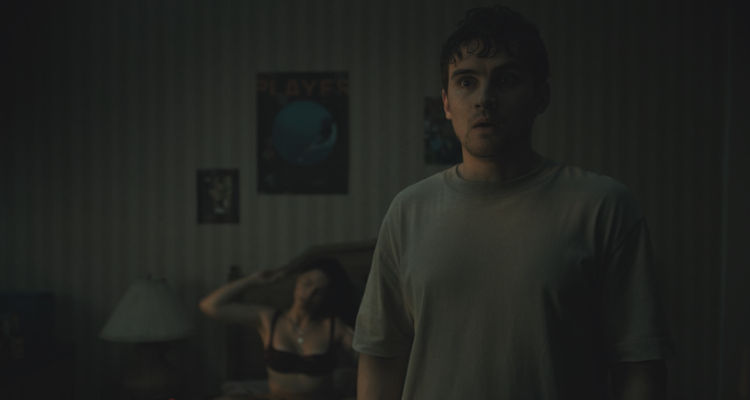
I want you to forget all the supernatural elements of this movie and look at the relationship between Nikki and Bear as is. From the moment he makes his wish and it comes true, of course. What I couldn’t help noticing was the fact that this was a typical real-life abusive relationship with the typical roles reversed. Nikki in Obsession behaves like your average male abuser in real life. We will go over this in detail. What makes things even worse is that Bear, a supposed victim in this constellation of things, is almost just as bad. Maybe even worse, if you look at things from a certain perspective. What we end up with is this bizarre situation where two types of twisted abuse take place. They intertwine, wriggle, and fester until the inevitable end.
First, we will tackle Nikki’s analysis, the analysis of an abusive relationship. After that, we will move on to Bear and his side of things. So, here goes Nikki, and let’s just forget that the real her is trapped inside the body of this deranged maniac. A deranged maniac that’s actually a fairly accurate representation of abusive men. That thought was absolutely terrifying for me. When it first hit me, I felt the need to do something. Obsession shows you the true hell women go through in relationships with men like this. Men who are highly volatile, hypersensitive, possessive, jealous, manipulative, and extremely dangerous control freaks. I’m hoping you haven’t run into this type in your life, but the chances are you already know someone like this.
Who would be with someone like this, you might be wondering. These people can be extremely charming, especially in the beginning. This is how they get you. Not to mention the fact that exactly these traits enable them to financially prosper in our fucked up society. And if they’re attractive, well, I guess that’s a done deal. We don’t have to go too deep into their motivations for this relationship. If, however, we wanted to grossly generalize and speculate, we could. Bear is a perfect victim, someone who can be easily controlled and manipulated. For Bear, it could be a number of things, the obvious one being being with an extremely hot girl you’re also in love with. If we complete the transition and replace Bear with a generic real-life woman, this works as well.
Blow by Blow
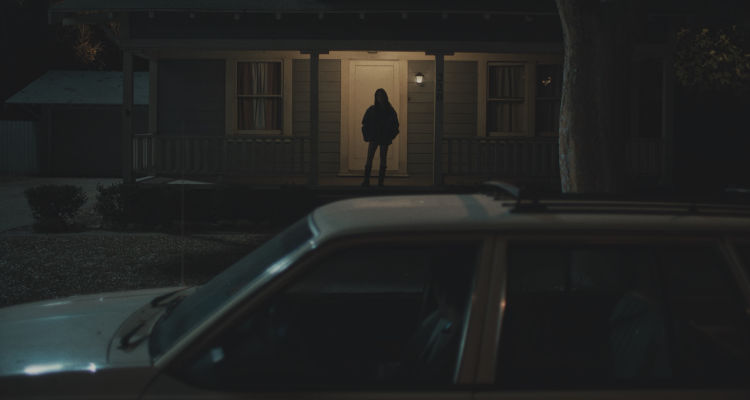
We’ll start the moment Nikki shows up in front of her door after saying goodbye to Bear, who’s still in his car, moments after making his wish. She immediately invites him in, practically declaring her intention to “upgrade” their friendship. Then she quickly “remembers” that his cat died and that he might not be in the mood. She brings this up to not only show how “considerate” she is but also to swat away that argument from him. Remember, like in all abusive relationships, it’s all about power and, intrinsically tied to that, control. Actually, the cat’s death is weaponized as an argument for him to come inside. I mentioned control and power, and what happens next perfectly illustrates that. She goes around the car, opens his door, and tries to unbuckle his seatbelt for him to go inside her house.
After he sheepishly resists, she abandons that plan quickly and returns to the passenger seat. She’s probing for weaknesses, determined to get what she wants. The next step is obvious; she “figures out” that he actually wants them to go to his house. This is even better for her, as she can establish permanent control over his life. After she moves in, of course, which is the logical next step. The struggle between Old Nikki and New Nikki is obvious throughout this. And we can simply chalk it up to the internal struggle of the abuser that usually shows up later in the game. When I say internal struggle, it’s not a struggle between good and evil but between different paths to the desired destination: full power and control.
And she’s willing to do anything to get it. Like lying that her father has cancer. And then stripping in her underwear. And saying Come to bed with me; I need someone. Classic manipulation at its best. In the morning, it’s the full best girlfriend ever treatment. Bear wakes up, and the breakfast is already waiting for him. I think you can already see a man doing this, making breakfast in the morning to show just how much he cares. Of course, people do actually do this as a genuine act of affection, but we’re talking about this specific movie. I have to admit that I don’t know what to do with that weird cat shrine thing, so I’ll just move on. What happens next is a montage of your usual “couple in love” stuff. We can call it a honeymoon period. Mostly because that’s exactly what it is.
The Noose Gets Tighter and Tighter
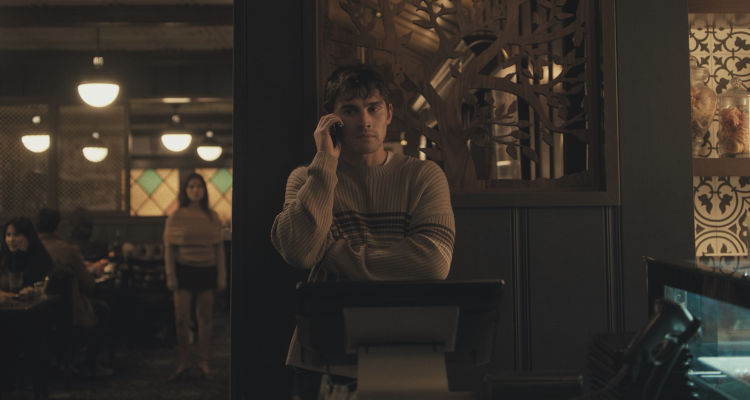
The first outward expression of control happens early on, during their first night together. He opens up a laptop to see what the fuck is going on with these Willow wishes, and she gets up and asks him what he’s doing. This kind of makes sense but is also a sign of things to come. We fast forward in time after that “couple in love” montage to them having dinner in a restaurant. Bear is on the phone with Ian, away from the table, and we see Nikki watching him like a hawk in the background. Here we see those signs of typical controlling behavior. Who are you on the phone with? What are you talking about? If these intentions are called out, the abuser may simply reframe them as concern. Perhaps even as love and devotion, something that the other person may be in desperate need of.
Perhaps this is the first time someone has shown that type of interest in them and what they’re doing. To make things worse for her, Ian is telling Bear that her father doesn’t have cancer. When he returns to the table, she gives him a gift, a classic move, you’ll admit. Bear still decides to ask her whether she lied about her father when she stands up and starts making a scene. To appease her, he backs off. Another familiar tactic on display here. Her emotions are running wild, constantly expressing fears that he doesn’t love her. These emotional outbursts lack the threat of violence, for now. However, she’s using them to manipulate Bear, as he doesn’t want her to be in this state. She is making him responsible for regulating her behavior.
When everything settles down and two of them are in bed, he tries to leave, but she yells stay at him. Of course, that’s when we see that she duct-taped the entire front door. She knows that’s not going to stop him from leaving, as it’s a display of the intensity of her emotions for him. Usually, in an abusive relationship, the first move of the abuser is to separate the victim from the outside world. Whatever contact he/she’s to have must be monitored, and it’s usually just to keep up appearances. The perfect example of this is the “boys’ night”. Bear wants to go alone, but she still manages to accompany him. Just like in real life, your friends can see that something is wrong in a relationship. That’s one of the reasons abusers tend to isolate their victims. And during this party, everybody can see just how crazy, jealous, and possessive Nikki has become.
99 Problems and 99 Problems More
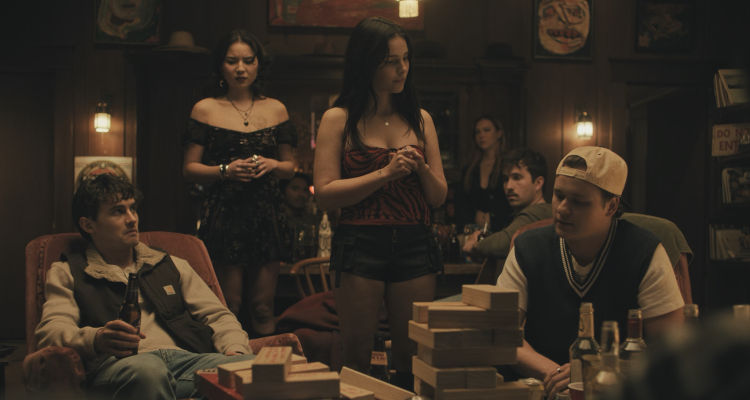
The first violent act Nikki commits is aimed at herself. She stabs herself in the face with a bottle. We can compare this to the usual male gimmick of punching walls with either hand or head. This is an intimidation tactic with the clear warning of future incidents. Add to this unpredictability and poor accountability, and you’re definitely in hell. Again, Nikki is making Bear responsible for managing her incredibly dangerous emotional reactions. Just like most abusers. All we need now is that famous sentence: look what you made me do.
This time there’s also a subliminal and not-so-subliminal message directed at him: look what I’m capable of. One of the main themes here is emotional coercion. The very act of self-harm becomes something that controls the behavior of the partner, I mean, the victim. What happens next is one of the most fucked up scenes in the whole movie. And something that happens far too often in real life. Nikki kills Sarah in the most brutal way imaginable. Bear is hers and hers alone. Anyone who stands in her way is going to get obliterated. When it comes to these toxic and abusive relationships, the focus is on the victim.

However, we should not forget about the trauma and issues that happen to their friends and family because of this relationship. Things get even worse if kids are involved, as they’re forced to become active participants in the whole ordeal. For example, Trevor Summers coerced his 14-year-old daughter and 12-year-old son to help him break into his estranged wife’s house. He kidnapped, tortured, raped, and tried to kill her before she eventually talked him down. Pladl’s incest and murder case is even worse but features many of the same manipulation and coercion tactics.
Now, just imagine that your friend is with someone this unhinged. You’re put in an extremely difficult and dangerous position. You’re practically given a ticking time bomb that you don’t know how to disable or even when it’s going to explode. Unable to process or get out of this relationship, the victim practically transfers their rational thinking onto you. This happens when you’re already wrestling with your reaction to this problem and how to resolve it.
The Bear Story
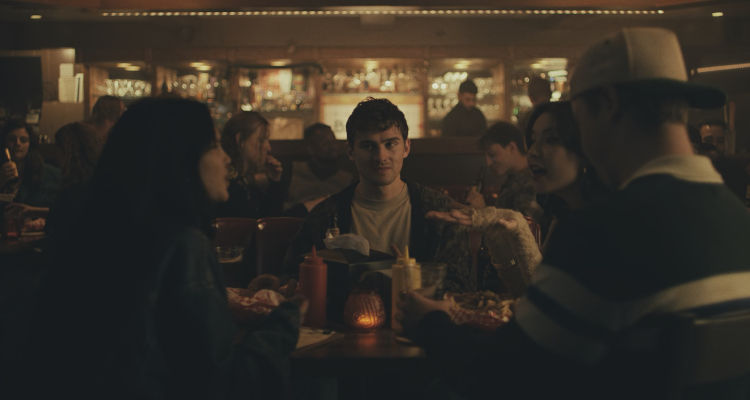
Bear is seemingly stuck in a vicious cycle of a reverse agency loop. Something a lot of people struggle with, including me. Let me explain. We start with personal agency, which enables you to make decisions, take responsibility for said decisions, accept the consequences, and then have an even stronger sense of personal agency. If that loop is broken, you struggle with making decisions and, in turn, avoid responsibility and seemingly avoid consequences (you don’t). This leads to a feeling of helplessness and a complete loss of a sense of agency. Ever heard of procrastination?
When we first meet Bear, he’s this sympathetic loser, a character you can relate to. He’s working a menial job, and he’s in love with a girl way out of his league. And yet he simply cannot admit his feelings to her. Unable to make the first move, he enlists the help of his friend Ian. Ian gives him the classic asshole toxic male advice to provoke her. To call her “Freaky Nikki,” although they both know she hates that nickname. Bro, just ignore her; just be an asshole to her; the chicks love that, bro. Here, we learn a bit about the origin of his infatuation with her. When his grandma died, she was there for him.
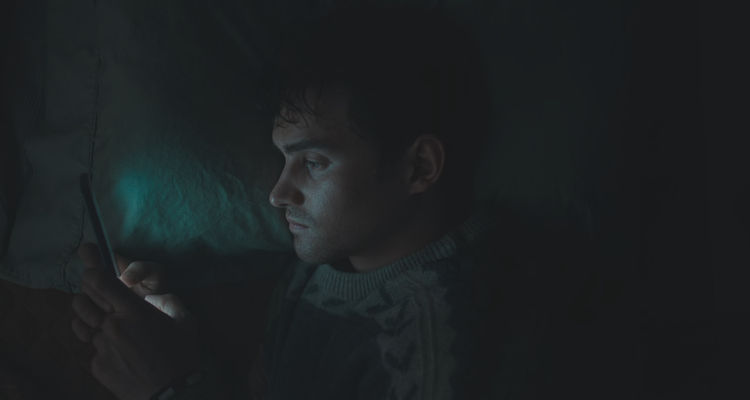
For Bear, this was incredibly impactful. For Nikki, this could’ve been just a decent thing to do in that situation. If we wanted to pull on this thread, we could go down another rabbit hole. Bear is apparently not wrongly interpreting what Nikki has done, something that could’ve easily happened. You know that thing where a girl casually smiles at a guy or asks him a question, and he interprets that as romantic and sexual interest. He becomes locked into this fantasy he builds, which, in turn, makes things even worse. Here, Bear just dreams about the two of them being together.
The next stage is fixation. At the six-minute mark, we see him in his bed checking her social media. To be fair, that’s something we all do, but context is everything. Then his phone rings and it’s her! She wants him to come to the trivia night. She needs that big brain of his. Nikki then clarifies that she’s quitting and this is practically a goodbye. To further reinforce this idea that she’s the one, Bear swoons over Nikki giving a homeless person some money. She’s the perfect girl, and everything would be perfect if they were together… As it usually happens, Nikki is fully aware that Bear is into her and that he’s struggling to tell her that. So she broaches the subject minutes before he makes his wish. And he still chickens out.
Divine External Intervention

Here, I want to go back to the beginning of this chapter, to the struggle to make decisions. This struggle goes back to the intermediary issue of shouldering responsibility. However, the trail leads to something else: agency. If you’re making decisions, shouldering responsibility, you have personal agency. And that’s sometimes a terrifying thing to have. There’s no excuse then not to be the guy your ego is telling you you actually are. Did you notice that most people need external intervention, no matter how insignificant it is, to practically justify something they wanted to do for a long time? They wanted to go to a gym; no one knew anything about this, but after their friend started going to the gym, they asked to “check it out”.
The wish here is for external intervention. However, that’s the only external intervention we actually get in this story. No friends intervene, and there’s no “formal intervention,” although the situation clearly calls for it. The police probably intervened, but that happened too late. This means that Bear does nothing to remedy the situation in the following days. It’s like you have something you know you have to do, but you keep postponing that moment. Just a little bit of that temporary relief and you’ll be ok. And your ego won’t take a beating. You start to accept these bizarre events as the new reality. This is a process called progressive normalization, and it works both ways.

Obsession actually features double progressive normalization. Bear is accepting her unhinged behavior, including self-harm. Remember, he didn’t take her to the hospital after she stabbed herself in the head. There’s something clearly wrong with her, and she needs help, professional help. On the other hand, to get back to Nikki as the representation of a male abuser, it’s the process where things the other person wouldn’t dream of allowing become normal.
It starts slowly, and it gradually escalates into more extreme behavior. The most popular concept that illustrates this is the Boiling Frog Theory. Simplified, it says that if you throw a frog into boiling water suddenly, it will try to escape. If, however, you put it in cold water and then slowly increase the temperature, it will not try to escape despite being cooked alive.
Power Corrupts, Or Does It?
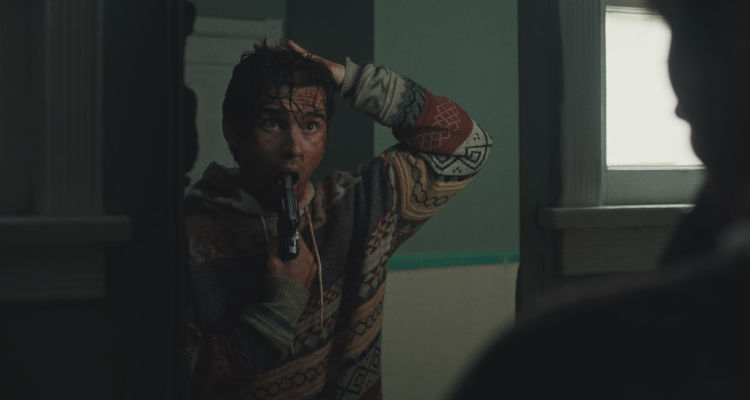
The saddest and most tragic part of this “romance” is that it’s clear that Bear doesn’t love Nikki. He’s using her to validate his own ego, to prove to himself and others that he’s not a “loser”. I want you to think about this bizarre situation. Nikki, bound by the wish, is practically an automaton, something Bear already is! He defines himself and views the world through the lens of the tribal system of values. He’s a loser, a coward with nothing to offer, a socially awkward guy without money, looks, or any other valuable trait. That’s what has been drilled into his head since an early age. Instead of accepting himself and his authentic personality, he follows the superficial and disastrous path that this system offers.
If he refused to define himself through this system of values, he would get everything he wanted. His burning desire to hook up with Nikki would either subside or vanish completely. Or he would go through the very normal process of rejection and moving on. And, we know this already, he would hook up with the real prize: Sarah. And everything would be perfect. Alas, the validation he gets from Nikki’s obsession is the thing he craves. And he’s willing to go through anything to get it. Just like she is willing to go through anything to get him.
The difference is that Nikki is bound by the wish, and Bear is bound by the need for validation of himself (ultimately, his ego). That’s his “real” personality. The reason why he does nothing to help Nikki, although he clearly sees that she’s suffering, is because it would erase his new personality. It would be equal to suicide. The escalation of that equation is the removal of the word equal. Well, I think that’s about it. What do you think about all of this? Let me know in the comments below.